Blog
Company updates
Katathon 2026: two days, five Prototypes, zero permission slips
For two days, teams from across Katanox took over our Amsterdam Hub for a focused sprint: form teams, pick a theme, build a prototype, demo it.

George Georgiadis
CTO & Co-founder

Although we’re approaching the dog days of summer, we found it to be the perfect time to have our latest Katathon (meow).
For two days, teams from across Katanox took over our Amsterdam Hub for a focused sprint: form teams, pick a theme, build a prototype, demo it.
The goal wasn’t purrfection, but momentum. Make something real, learn fast, and see what happens when you give talented people a little space (and a lot of snacks).
What’s a Katathon, anyway?
A Katathon is our internal hackathon: a short, focused sprint where people form teams, pick a theme, and build prototypes that might otherwise get crowded out by “the urgent” during a normal week.
It’s a chance to pounce on thorny problems, chase bold ideas, and learn new things together, all without a leash.
This one had a few guiding ingredients:
A clear timebox (two days: kickoff, build, demos, awards)
Teams of 3–5 to keep things nimble
Themes that map to real challenges and opportunities: developer experience, compliance, operations, and product/platform innovation
A strong bias toward prototypes: don’t over-polish, claw your way to the top; show the thinking, prove the concept, and make it demo-able
The energy: equal parts serious building and serious fun
Some of the best moments weren’t in the code. They were in the in-between: people sketching on glass walls, impromptu debates about “the simplest thing that could possibly work,” and teams stress-testing each other’s assumptions with the kind of constructive honesty you only get when everyone is chasing a common goal.
And yes, we also had:
plenty of drinks and snacks (for humans, not cats)
ping pong breaks (highly competitive, questionably athletic)
a team dinner to keep the social glue strong (and the batteries charged, no catnaps needed)
The highlights were the small ones: the demo countdown, the clock moving too fast, and someone quietly padding over to help untangle the last blocker.


The format
We kicked off with a quick welcome, rules, and team breakdown (the teams were formed ahead of time, so we could hit the ground running). Then, we moved straight into build mode.
Whiteboards filled up, glass walls became strategy canvases, laptop fans spun up, and a few “quick ideas” immediately evolved into “okay, this might actually be really useful.”
From there it was two days of heads-down building, quick check-ins, and the occasional “wait… why is it doing that?” moment (followed, ideally, by a fix and a celebratory snack).
What we worked on
By demo day, five teams presented prototypes across a range of themes from developer experience and operational tooling to compliance and platform visibility.
We’ll keep the exact details under wraps for now (some ideas deserve to stay safely in the box until they’re ready to roam free), but the approaches were refreshingly practical.
Across the projects, a few patterns kept showing up:
Reduce uncertainty, increase leverage
A couple of teams went after the same underlying enemy: unpredictability. When environments are inconsistent or external dependencies are flaky, progress slows down fast.
Several prototypes focused on making key workflows more repeatable and reliable, so testing, validation, and iteration don’t feel like herding cats.
Make the invisible visible
Another thread: if we can’t see it, we can’t improve it. Some projects explored ways to emit and capture clearer signals across systems (structured events, statuses, and “what happened when” traces) so teams can move faster with fewer blind spots and fewer mysteries.
Turn scattered knowledge into answers
Modern hospitality companies generate a lot of information: docs, databases, dashboards, messages, and the occasional piece of tribal knowledge that lives in someone’s head until it doesn’t.
A few prototypes centered on more direct, secure ways to get from “What’s going on here?” to “Here’s what we know,” without having to go on a cross-tool scavenger hunt.
Automate the repetitive parts (keep humans in the loop)
In areas like compliance and operational workflows, the spirit was consistent: automate the toil, keep judgment where it belongs.
Prototypes leaned toward assistive systems: tools that help people move confidently and quickly, without turning decision-making into a black box.
Prototype-first, iterate later
No one tried to build a cathedral in 48 hours. The goal was to produce useful stepping stones: something concrete enough to validate the direction, spark discussion, and form the basis for what might become a real project later.


Demo day: five projects, one tough vote
The final session was exactly what you want from a hackathon demo: short pitches, honest trade-offs, a few heroic last-minute fixes, and plenty of laughs.
After the presentations, everyone voted, and we (initially) ended up with a tie at the top of the scratching pole, which felt like the right kind of outcome given the quality (and variety) of what the teams brought to the table.
And while every team built something different, the overall vibe was the same: focused, a little chaotic, and surprisingly productive for something that started with “So… what if we tried this?”
Agents in action
As a matter of fact, two of the projects focused on building with Agentic AI, which is natural given that agents are quickly becoming the new front door of the internet and a widely adopted interface within nearly every product.
In the name of make the invisible visible and turn scattered knowledge into answers, these teams were able to democratize data and make it simple to source useful information for the wider Katanox team instead of hunting for solutions.
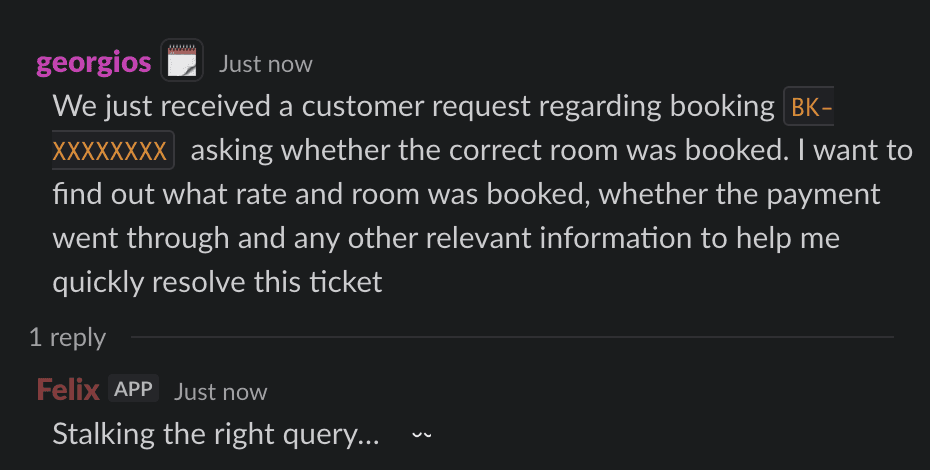
One of the agents is already in production, reducing manual workload and improving our team’s efficiency twofold. Beyond the team bonding, collaboration, and fun, our Katathons are producing real, tangible results!
Why we do it
As illustrated by the example above, a Katathon is a chance to trade meetings for making, and to give ideas that normally get buried under the litter by “the urgent” a fair shot at becoming real.
Two days isn’t enough to build everything, but it’s plenty of time to test assumptions, learn quickly, and ship something you can actually show.
Also, it’s hard not to love a time where the official toolkit includes whiteboards, caffeine, and at least one teammate saying “hold on, I’ve got an idea” right before sprinting back to their laptop like they’ve spotted a laser pointer.
Join us
If you’re itching for a new opportunity and this sounds like your kind of thing (small teams, meaningful problems, room to experiment, and the occasional Katathon cameo), take a look at our open roles.
(And if you do join… we can’t promise a stress-free demo clock, but we can promise snacks).
George Georgiadis
CTO & Co-founder
Share